
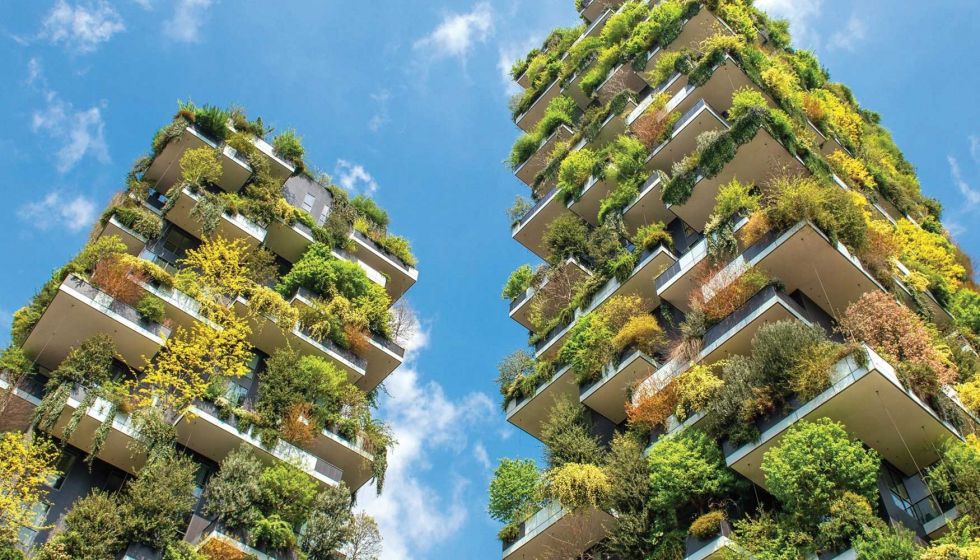
Every year new trends emerge that are supposedly going to take off. Some do; many others don't. This year, the crystal balls point to an architectural trend built around biophilic design. Careful, though — don't confuse it with eco-design, which is about making construction sustainable. The term biophilic translates as "a love of, or inclination toward, living things," and in the 1980s a few idealists began using it as they watched urban development cut itself off from nature so drastically.
The biophilia hypothesis, introduced by Edward O. Wilson in his book Biophilia, proposes that human beings are genetically predisposed to feel drawn to nature. The author argues that all humans inherently love the natural world and feel a connection with it.
In recent years the term has resurfaced, and it seems to be doing so with real momentum.
But how do we reconnect with nature from inside our own homes when many cities don't even have a minimum of nature woven into them?
For years, residential developments have tried to do without green areas, since they require frequent upkeep that becomes an expense for the community or the local council. Even clients who want a house with a small garden opt for artificial solutions to spare themselves the chore of mowing the lawn. It sounds crazy, but at today's pace of life, maintaining 15 square meters of grass becomes an obligation we have no time for, instead of an enjoyable moment that really takes no more than an hour...
For some time now, people have been bringing vegetation into their homes as decoration. Plants of every shape, color, and size that turn your apartment in the middle of "insert provincial capital here" into a small oasis. Mind you, you'll have your work cut out keeping all those plants alive through the four seasons if you don't want your living room to end up as a plant cemetery.
The pandemic (helped along by remote work) led many people to move away from city centers, returning to the countryside in search of that connection with nature we mentioned at the start of this article. Not everyone can do that, however.
Biophilic design aims to go a step further: introducing vegetation not just through houseplants but in the form of vertical gardens or green walls, in a way that actually improves air quality.
It also means getting light and ventilation naturally, relying less on artificial systems, through large windows that also connect you visually with the natural surroundings.
There's no denying that all of this brings multiple health benefits. That's why architects, designers, and other construction professionals have a responsibility to show clients these benefits and find solutions that make them accessible, so they don't remain an exclusive privilege of those with deeper pockets.
Among the benefits of this architectural trend is mental health: integrated biophilic design reduces stress and improves mood.
Since filling a building with plants isn't the answer, other strategies are needed: natural materials such as wood, wool, or leather; the color tones found in nature, like earth and sand hues; organic shapes; natural light; soft-toned lighting and warm color temperatures; vegetation in all its forms...
Natural ventilation isn't always possible, which is why mechanical ventilation systems clear the space of pollutants and renew the air, improving indoor air quality.
Large corporate offices are implementing biophilic design in a big way — but how wonderful it would be to bring it into our homes, whatever kind they may be, to improve our quality of life just a little.
Balconies, terraces, and courtyards are the elements that could bring a bit of the natural world into our lives.
Right about now you're probably picturing that window overlooking your interior courtyard, with its view of stained, streaked facades and an endless assortment of clotheslines in every shape and color.
Indeed, integrating biophilic design at the design stage seems far less complex than applying it to existing buildings, where the available budget has to be considered realistically.
The following chart, published by Positive Spaces in collaboration with Interface, proposes ways — from the cheapest to the most expensive — to bring nature into a space.
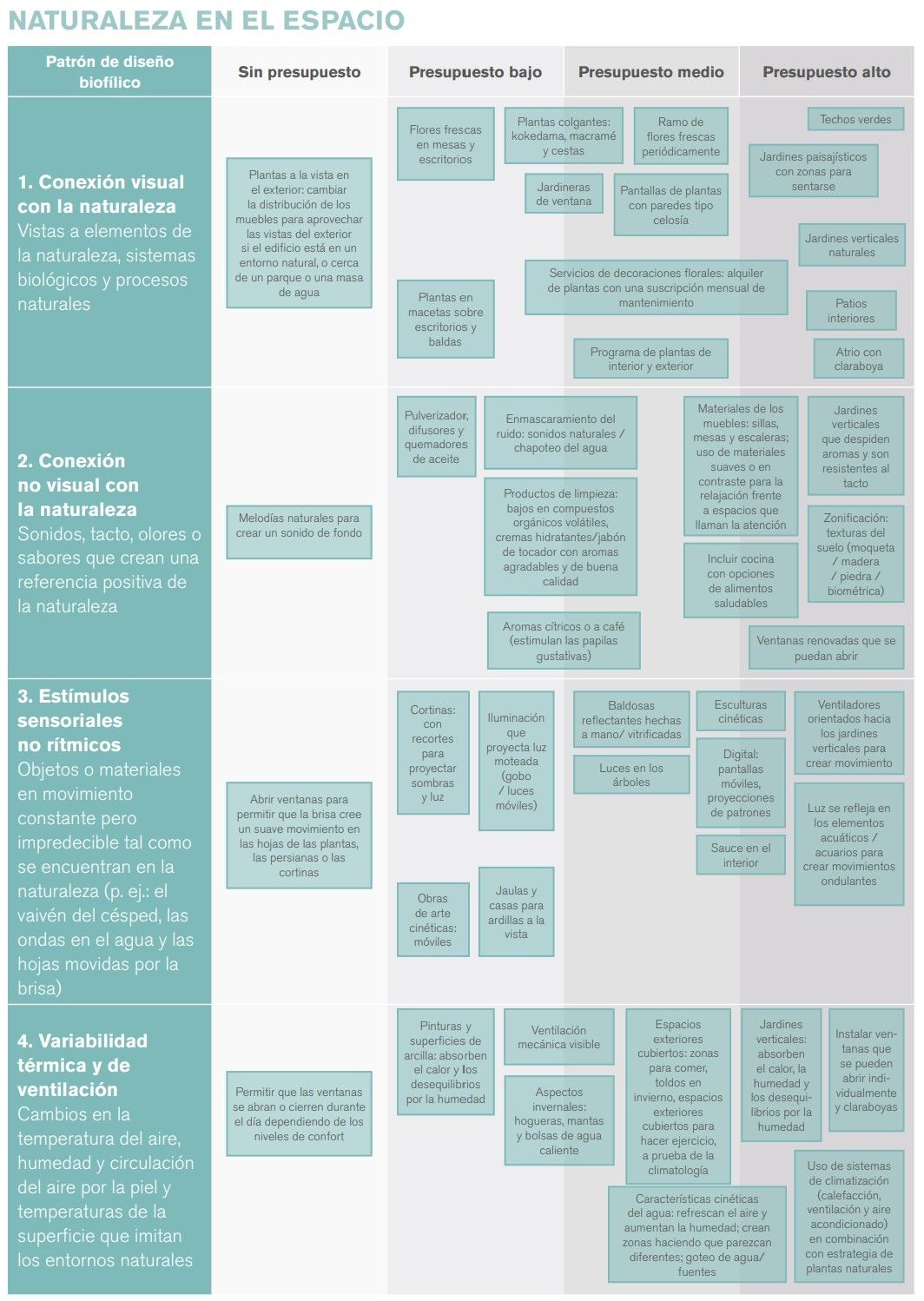
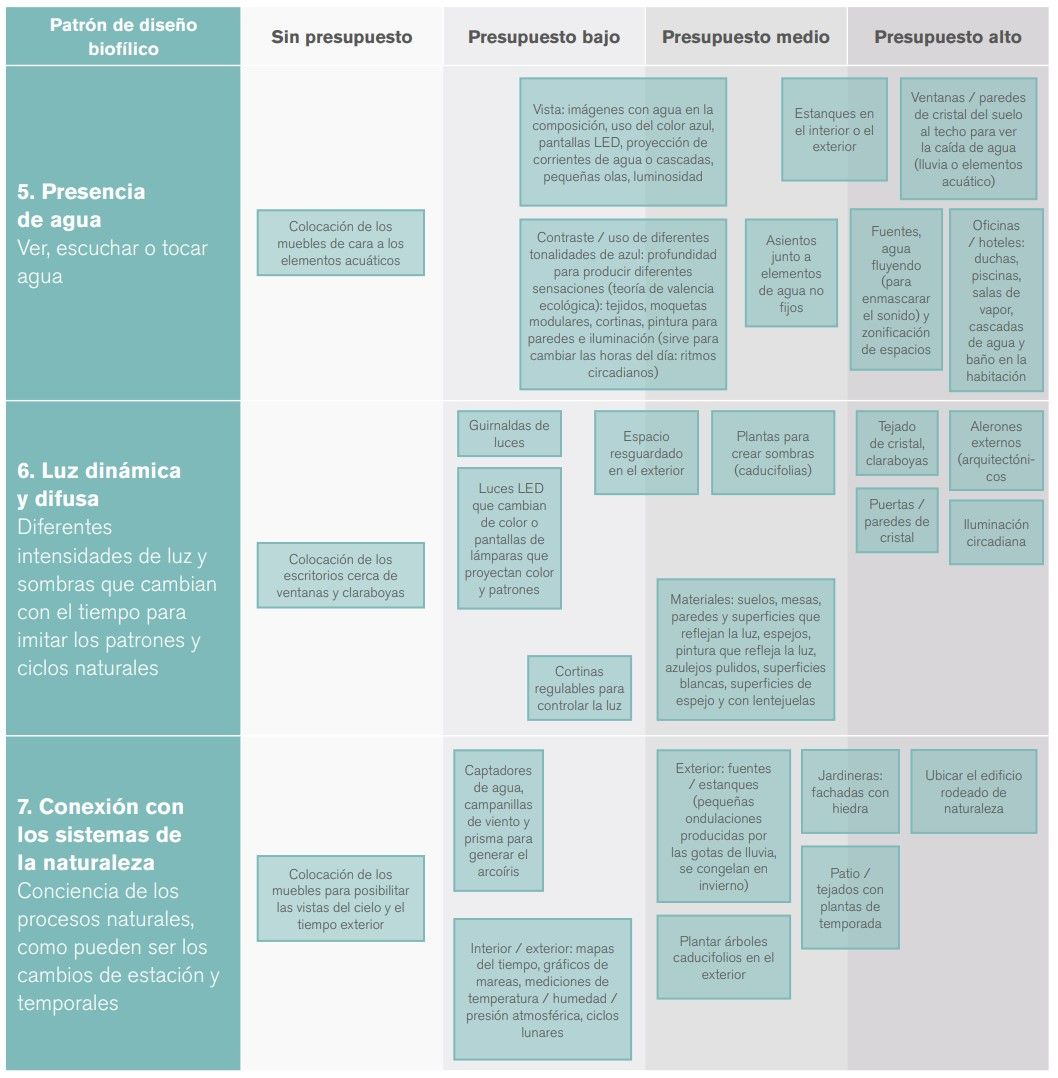
Small interventions can achieve big improvements.